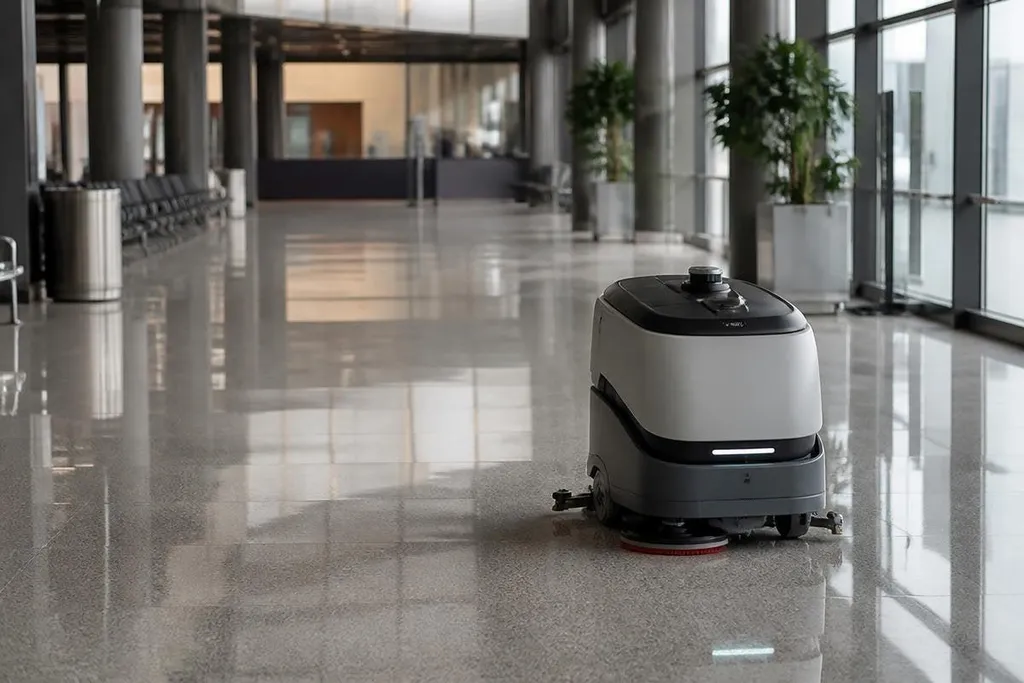
A cleaning robot can scrub a large floor without a human steering it, but that does not make the whole service autonomous. The hard work starts when the robot meets doors, people, lifts, cables, spills, and a charging dock that is not where the map expected it to be.
Quick read
- Floor cleaning is the first practical job because routes and surfaces can stay predictable.
- A service still needs people for setup, edge work, spills, blocked paths, and repairs.
- The useful measure is completed cleaning with fewer staff callouts, not robot running time.
Why floors come first
Autonomous cleaning works best when the robot repeats a known route. Large corridors, supermarket aisles, airport halls, and warehouse floors give its sensors a clear area to read and its software a stable map to follow.
Most commercial floor robots use LiDAR, cameras, or both to detect walls, shelves, people, and other obstacles. Simultaneous localization and mapping, known as SLAM, lets the robot build a map while estimating its position inside that map.
That map does not remove the need for site planning. A manager still needs to mark restricted areas, set cleaning zones, choose operating times, and check that the robot can reach its charging dock.
A route that looks easy on a screen can fail when a fire door stays open or a delivery trolley blocks an aisle. The service model follows from these limits: a cleaning company may sell scheduled floor coverage, while people handle toilets, stairs, corners, spills, and tasks that need judgment. The robot becomes one part of the work, not the whole crew.
What the robot changes
During quiet hours, the robot can repeat a route, record where it has cleaned, and return to charge when its battery runs low. That record gives a site manager something a paper checklist cannot: a time-stamped view of the route and the areas the robot skipped.
The value depends on the building. A wide floor with few changes gives the robot more useful work than a small site with tight rooms and frequent obstacles. When it spends much of its shift waiting for doors or staff assistance, the robot may still clean well, but the service will cost more to run.
Cleaning contracts also need evidence from the sites where machines run. Robot24.com cleaning robotics reports can connect a scrubber’s route and staffing needs to the service plan. That link shows whether the robot cuts paid cleaning time or moves the work to remote support.
The next step is not a robot that handles every cleaning job. It is a service that connects the machine to scheduling, remote alerts, spare parts, and a person who can respond when the route breaks.
Where autonomy stops
People remain part of the system for reasons that are easy to miss in a product demo. Someone must fill tanks, empty recovery water, clean brushes, inspect sensors, and move objects that the robot cannot safely push aside.
Safety also limits independence. A robot working near the public needs obstacle detection, speed limits, emergency stops, and a clear way for people to pass. The exact setup depends on the site, the machine, and local rules, so a vendor’s claim about unattended operation needs a site test behind it.
Data raises another practical issue. Cameras and location records can show where people work and when they move through a building. Operators need clear rules for access, storage, and deletion before they place sensors in public areas.
I’d choose a slower robot with reliable recovery after a blocked route over a faster one that needs staff to restart it each hour.
A buying check for service operators
Use these questions before signing a contract:
- Map the site: Can the robot reach every planned area without lifts, stairs, or manual door control?
- Test the route: Run it during a busy period, not only on an empty floor.
- Count staff tasks: Record how often people refill, rescue, reset, or move the robot.
- Check the dock: Confirm that the charging point has power, space, and a clean approach.
- Price the gaps: Add edge work, deep cleaning, repairs, software fees, and training.
- Set a result: Measure clean floor area, missed zones, staff callouts, and time per shift.
A good contract should describe those measures in plain terms. “Autonomous” needs a work plan beside it, because the robot’s value depends on what people still have to do.
What happens next
The first durable cleaning services will grow around buildings with repeatable routes and clear operating rules. More varied sites may follow, but the deciding number will be completed floor area per shift after staff callouts, not the robot’s advertised battery life.